The UC Davis Good Life Garden blog has moved!
You should be automatically redirected in 5 seconds. If not, visit
http://goodlifegarden.ucdavis.edu/blog
and update your bookmarks.
Showing posts with label olives. Show all posts

Friday, March 11, 2011

A Beautiful Friday in the Garden

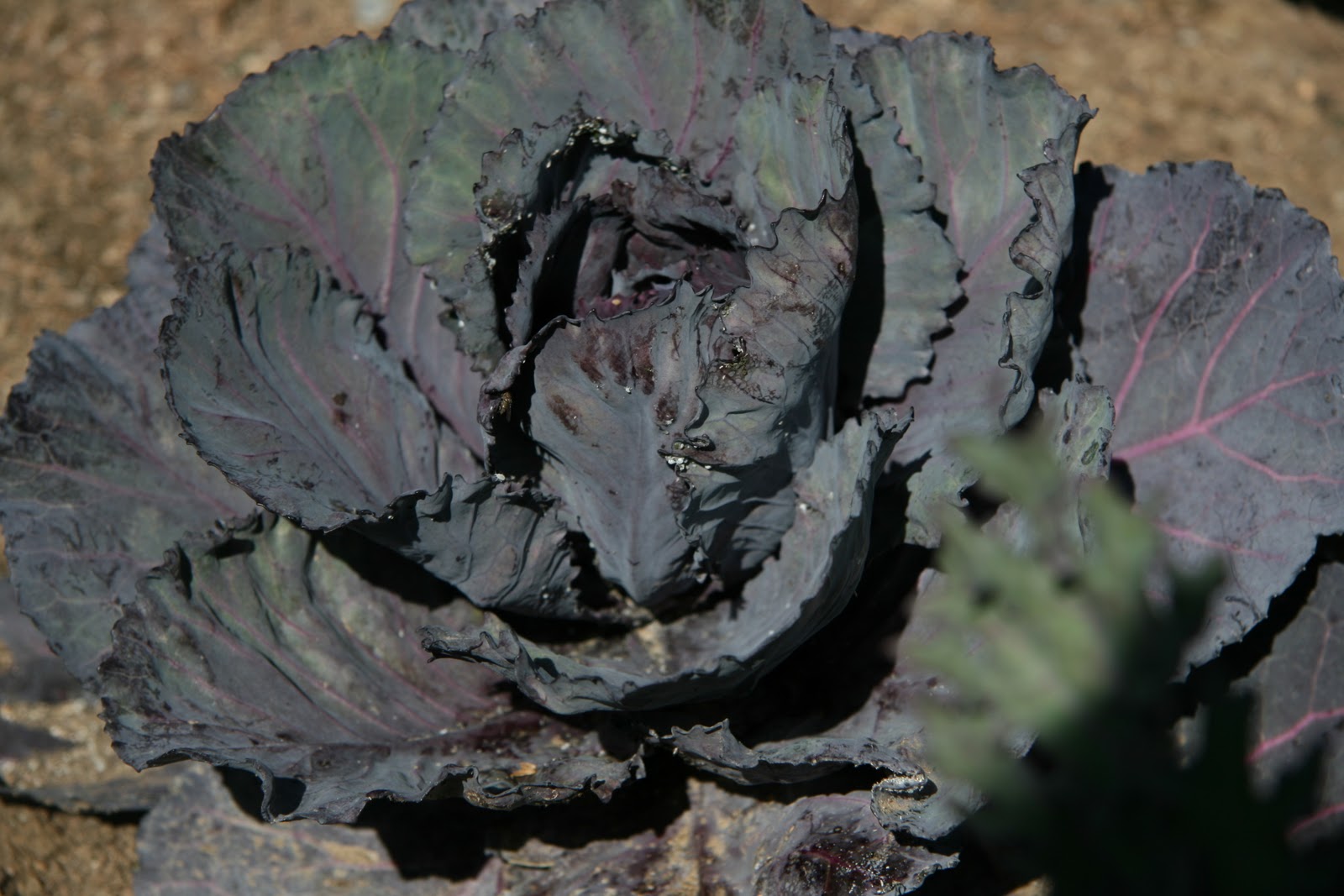
APHID UPDATE: The aphids have now moved on to cabbage and chard and Pat is fighting what seems to be a losing battle! She said that with the advent of the warmer weather and sunshine that the aphid population seems to be exploding. Her advice: just be diligent and continue spraying with the Safer Soap as much as possible, as well as following the other tips from our previous post.   And pay attention to all of your tasty leafy veggies - not just kale- because they are definitely not immune either!

Yep... the aphids have gotten to the cabbage.  Now that's nasty!

This poor little kale plant was stunted from all of the aphid damage!


Other than the bad news on the aphid front, everything else in the garden is doing well and it is a beautiful sunny day! The artichokes are sprouting, the calendula adds a vibrant touch of orange all over the garden, and the newly planted radishes and nasturtiums are starting to sprout!  Enjoy some recent photos below and have a great weekend!

The calendula is spectacular right now!

Now I want a Greek salad!
 

Maybe the chard is starting to have an aphid problem too, but it is all over the garden and still looks delicious to me!

The purple hues of the kale and cabbage complement each other nicely, don't you think?
Pat is working diligently away at spraying the kale with the Safer Soap to rid it of aphids.
Go, Mr. Ladybug, go!  Eat those aphids so I can eat this delicious artichoke.
Ok so these aren't in the garden, but are so spectacular I had to share them anyway.  The tulip trees on campus are breathtaking right now!

Thursday, June 10, 2010

Another Olive Tree Update!

A few months ago we reported on the status of some olive trees in our grove that were failing to thrive after their being transplanted to the UC Davis Good Life Garden in September of 2008. Their issues were the result of a percolation problem. What is that you ask? Well, essentially it means that water cannot penetrate or "percolate" into the ground where plants or, in this case, trees are growing; the cause of this issue came as a result of all the soil compaction that occurred during the construction of the surrounding buildings at the Robert Mondavi Institute for Wine and Food Science. To read more about this issue click here.

A few days ago we replaced three of the original trees, but have included a much better drainage system; incorporating a layer of crushed rock over drainage tubes covered with amended soil will hopefully provide a more comfortable growing environment for these historic campus trees. (See a photo of the start of this process below.) Our Grounds and Landscape Services crew will continue to monitor the situation and support the trees health in their new homes.


According to UC Davis Director of Grounds and Landscape Services, Sal Genito, who I spoke with about the project this morning, "The key to good plant growth is great drainage." He also mentioned the tell-tale sign of a plant struggling with percolation issues, "The soil smells rotten, like eggs, due to a build up of bacteria that can't escape."


Photo above: A flat bed trailer transports the trees to their new location from a historic campus owned grove in Woodland, California.

Photo below: A crane lifts one of the olive trees off the flat bed trailer and into its new location complete with necessary drainage.

Friday, January 8, 2010

Seasonal Fruit Profile: Olives

Growing tip: Olive trees are hardy, drought-tolerant and can bear fruit for a thousand years.

Did you know? The olive is a unique fruit—it is inedible unless cured, and is the only fruit from which a food oil can be extracted. (Other food oils are extracted from nuts or dry grains). The pulp layer surrounding the large central seed can be up to 30% oil.

In history: Olives were first planted in California at the San Diego Mission in the late 1700s, with the first olive oil reported to be produced in California in 1803.

About the fruit: Olives are native to the area that today includes Syria, Iran and Palestine; cultivation then spread to the Mediterranean basin 6,000 years ago.

Health: Olives are high in monounsaturated fat, which studies have correlated with cardiovascular health.

In the garden: Our olive trees are trellised to demonstrate the ‘super-high density’ olive farming method gaining popularity in California. Trees trained in this manner can be planted closer together than traditional olive orchards and can be harvested mechanically.

Learn more about olives by visiting our website.

Sources:
McGee, Harold. On Food and Cooking: The Science and Lore of the Kitchen. Scribner: New York, 2004.
Health content provided by Liz Applegate, Director of Sports Nutrition, UC Davis, www.lizapplegate.com
.

Monday, November 9, 2009

Olive Harvest in the UC Davis Good Life Garden


Introduction
It's that time of year, and, although the small trellised olive trees we have planted in the garden are small, they have produced quite a few good looking olives. Now what do we do?


UC Davis Olive Center
Arlene learns from campus olive expert Dan Flynn, Executive Director of the UC Davis Olive Center, to assist in the garden's olive harvest. The UC Davis Olive Center is the only center of its kind in North America conducting outreach and research on olives and olive oil. To find out more about who they are and what they do visit their website.


About Our Olives
In the UC Davis Good Life garden we grow Arbequina olives using a trellis system. This type of olive and high-density method is the future of olive farming in California which is why we've chosen to demonstrate it here!


When Are Your Olives Ready to Harvest?
Dan Flynn goes over with Arlene the tell-tale signs of when olives are ready to harvest.


Good for Olive Oil and Table Olives
Arlene asks Dan whether she could also cure the olives and make table olives rather than harvest the olives for olive oil.


Methods to Use for Safely Curing Olives
Here Dan discussed with Arlene the main methods for curing olives and refers her to this free publication from the University of California Division of Agriculture and Natural Resources called Olives: Safe Methods for Home Pickling.


Organic Methods for Controlling Olive Flies
Arlene and Dan discuss orgnanic methods for controlling olive pests by using a spray called GF120 (It doesn't sound organic, but it is!) or by using of fly traps.